

THE GREEN BOATER BLOG
sustainable boating topics
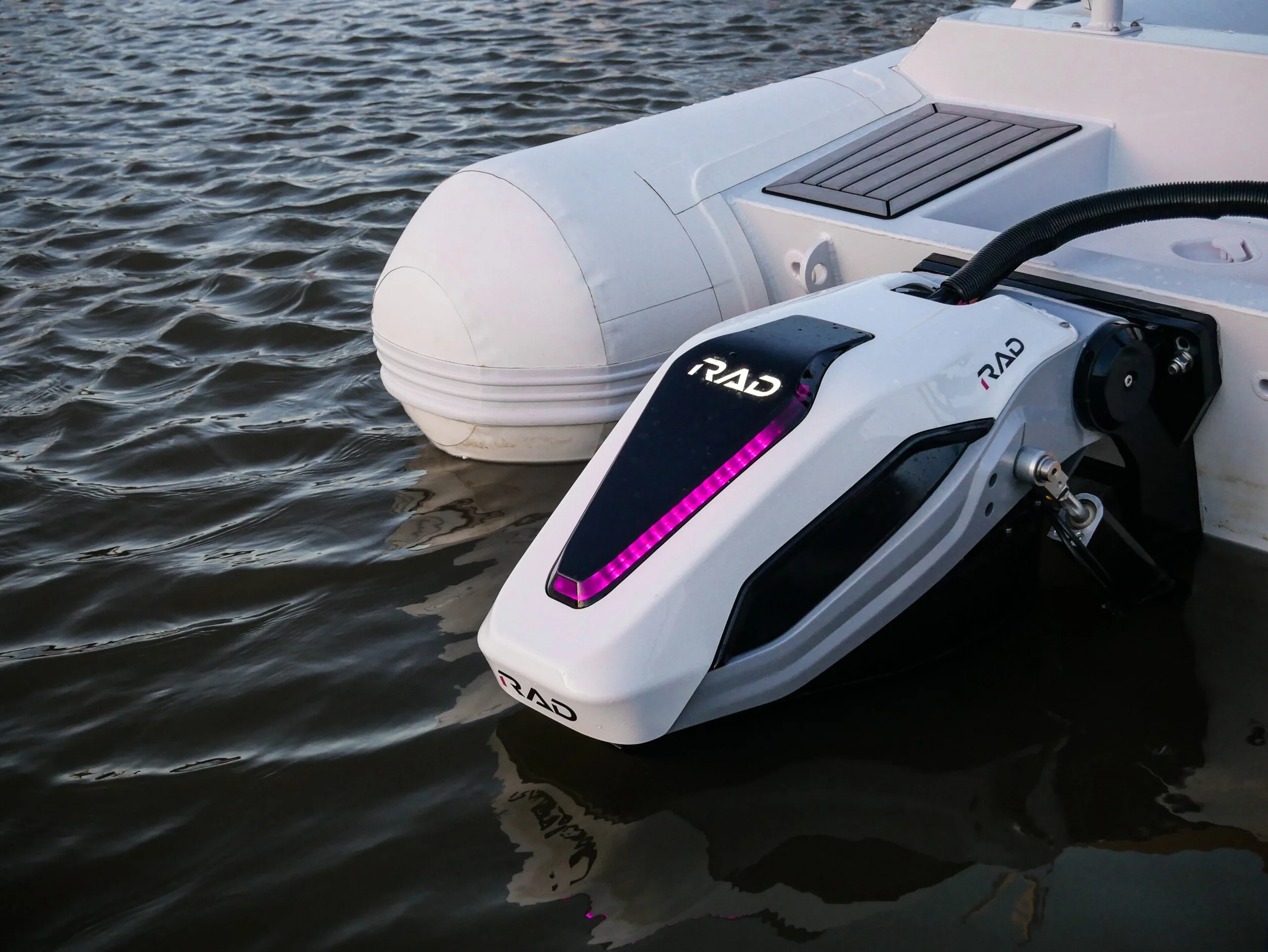
Landmark UCL Study Confirms Electric Boats Are Dramatically Quieter — And It Matters More Than You Think
Scientific Proof: Peer-Reviewed Study Confirms Electric Motors as a Measurable Conservation Tool
UCL Study Proves Electric Boating is a Transformative Win for Marine Life
The Study
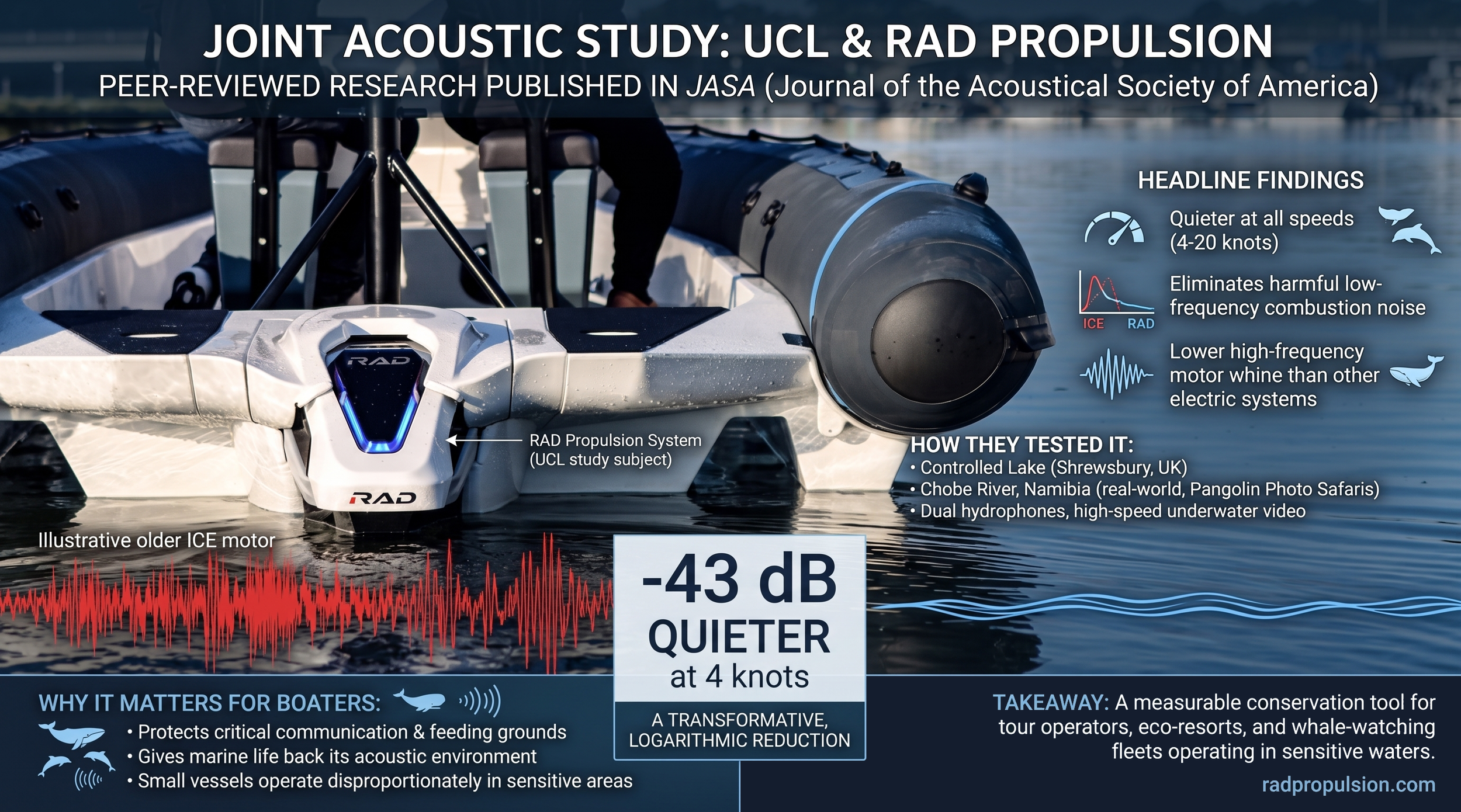
University College London's Department of Mechanical Engineering, in collaboration with UK-based RAD Propulsion, has published peer-reviewed research in the Journal of the Acoustical Society of America (JASA) comparing underwater radiated noise from electric versus internal combustion (ICE) outboard engines. It's one of the most rigorous comparisons of its kind to date.
How They Tested It
Two identical boats — one fitted with a RAD 40 electric outboard, one with an equivalent ICE outboard — were tested at speeds from 4 to 20 knots on a controlled lake near Shrewsbury, UK. Researchers used dual hydrophones, high-speed underwater video, and airborne noise measurements. They followed up with real-world testing in Namibia's Chobe River alongside Pangolin Photo Safaris' electric fleet.
The Headline Findings
43 dB quieter at 4 knots. That's a massive reduction — decibels are logarithmic, so this is a transformative drop, not a marginal one.
Quieter at every speed tested, even at 20 knots where propeller cavitation becomes the dominant noise source.
Eliminates low-frequency combustion noise — the kind that's especially harmful to baleen whales and other low-frequency hearing specialists.
Lower high-frequency motor whine than other electric systems previously studied, proving not all electric drives are acoustically equal. Engineering quality matters.
Why This Matters for Boaters
Underwater noise pollution is one of the most underappreciated environmental impacts of recreational boating. Marine mammals rely on sound for navigation, feeding, mating, and communication — and small vessels operate disproportionately in the sensitive coastal and inland waters where these species live. This study gives us hard, peer-reviewed evidence that switching to a well-engineered electric drive isn't just about cutting emissions; it's about giving marine life back its acoustic environment.
The Takeaway
For tour operators, eco-resorts, whale-watching fleets, and any boater operating in sensitive waters, this is the scientific validation the industry has been waiting for. Quieter boats aren't a "nice to have" — they're a measurable conservation tool.